Thirteen screens of forms became seven, and one AI step that asks what you love in your own words.
Industry
Streaming · Subscription
What We Built
Adaptive AI onboarding
Status
Self-initiated rebuild
Basis
13 production screens, torn down
Paramount+ is not an Agentify AI client and Agentify AI is not affiliated with Paramount+. This is a self-initiated rebuild: the teardown works from thirteen screenshots of the shipped flow, and every reimagined screen below is our own hi-fi prototype.
The Problem
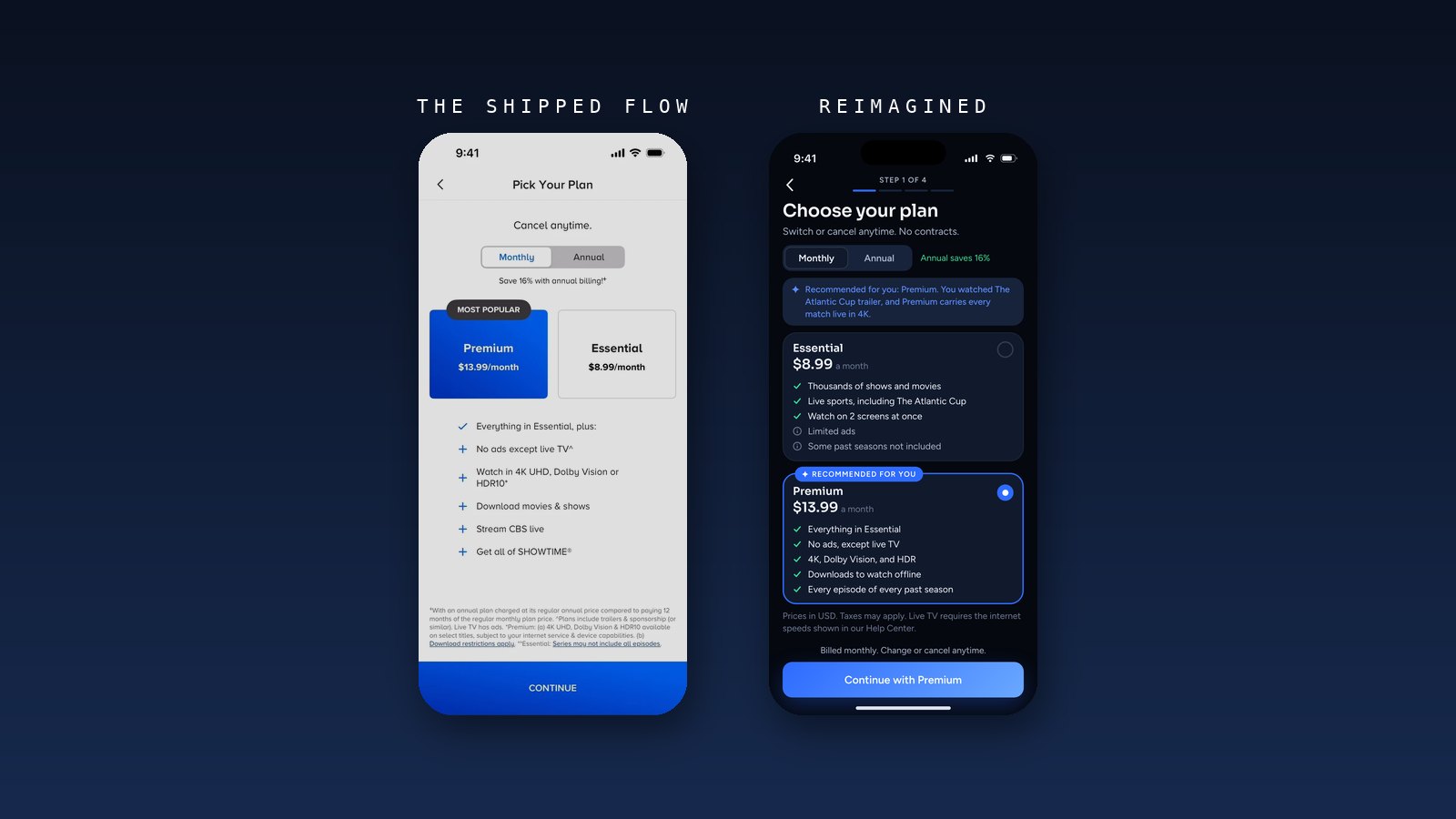
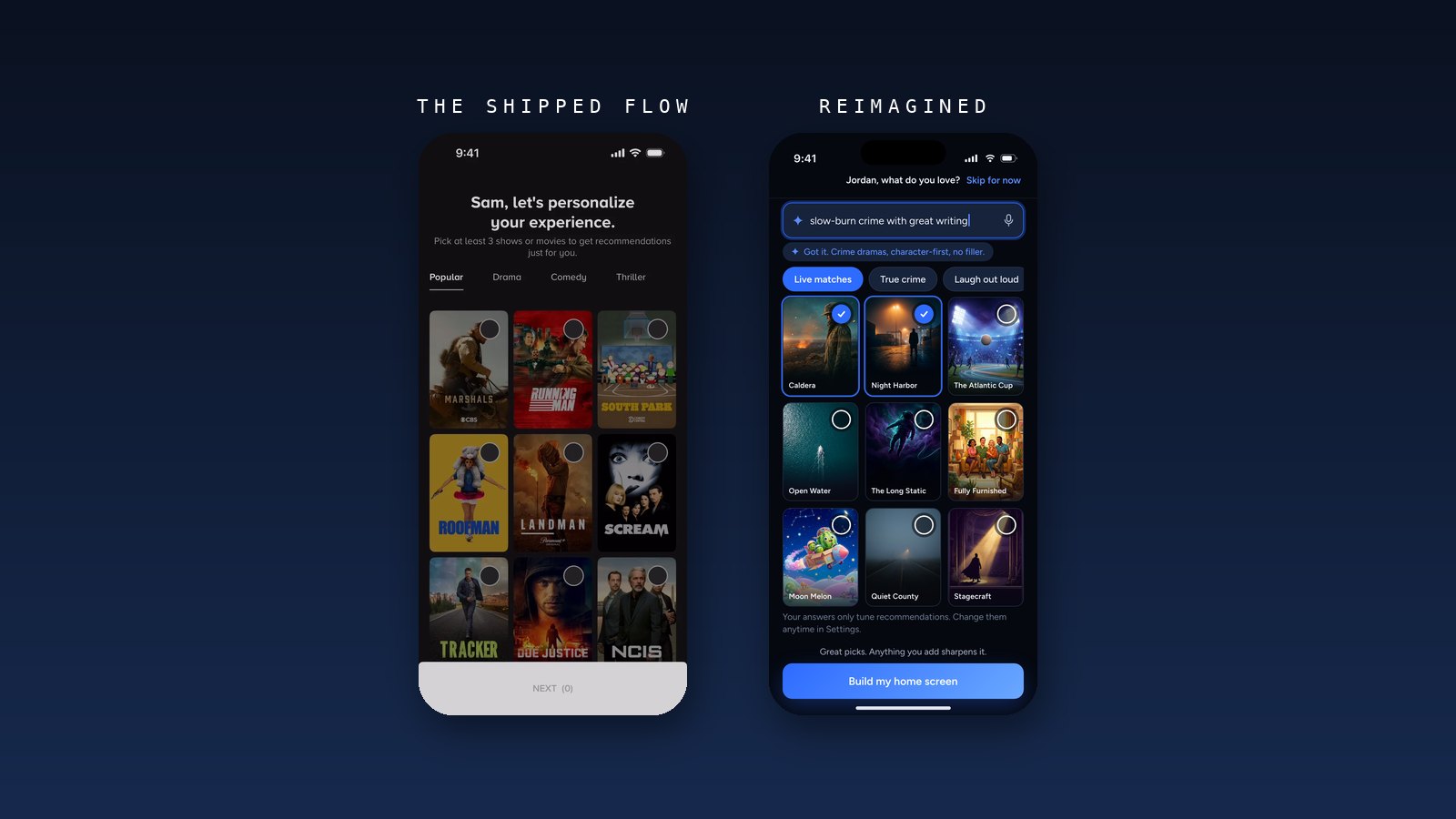
A new subscriber answers thirteen screens of questions before a single frame of television plays: a plan sell that anchors at $8.99 and immediately preselects $13.99, six form fields to watch TV, a birthday entered on a spinning wheel. Then comes the step that is supposed to make it personal, and it is a grid of posters with a counter that reads NEXT (0).
Forms extract. They do not learn. The fix is not fewer fields; it is an onboarding that asks one question in plain language and can actually act on the answer.
The Solution
An onboarding where the intelligence does the work the form used to: it reads the flow, asks one question, and proves it listened.
We read all thirteen production screens and mapped the friction step by step: the anchor-and-override plan sell, four screens of form entry, a birthday on a wheel, and a personalization grid that begins at zero. The teardown, not a hunch, set the brief.
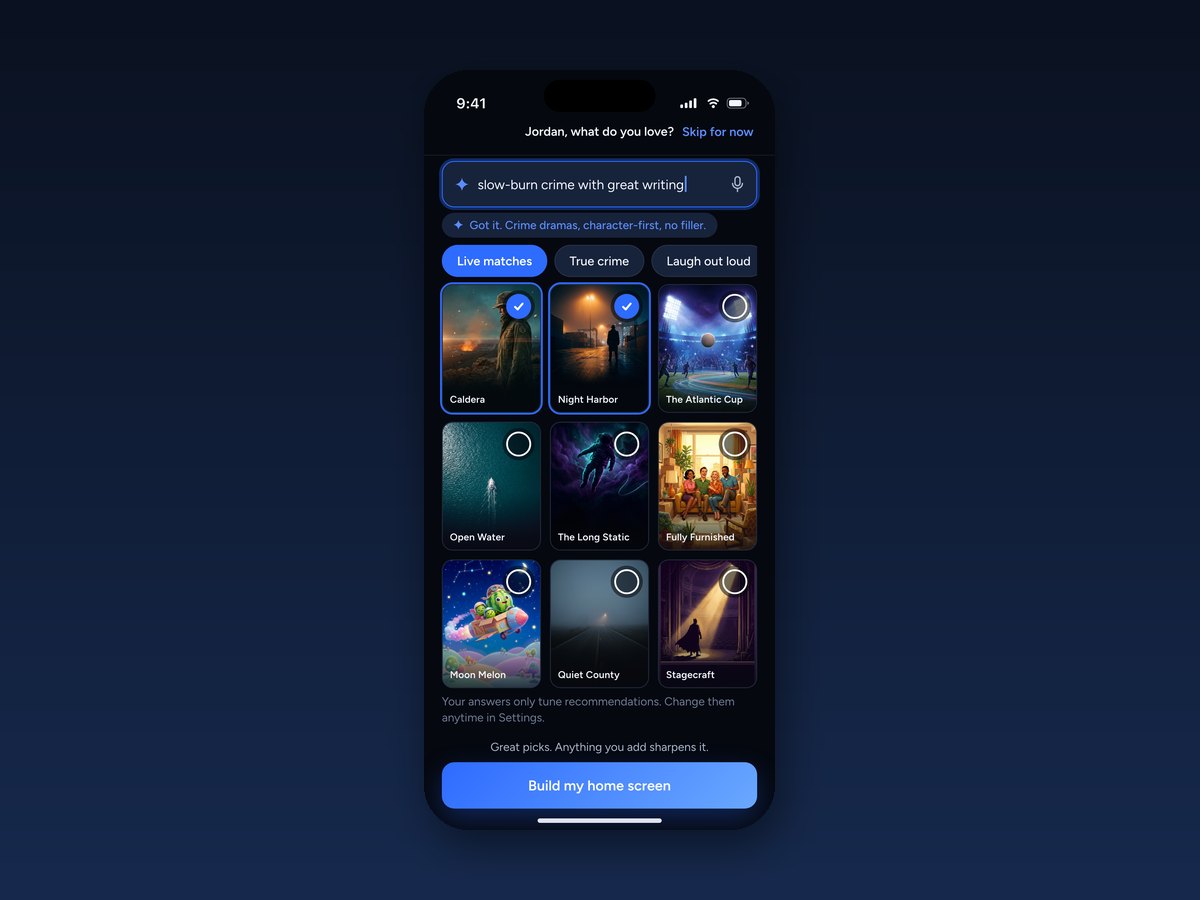
One adaptive step replaces the poster grid. Type “slow-burn crime with great writing” and the system answers in kind, then assembles the home screen from that sentence. Skippable, editable later, and never a prerequisite for watching.
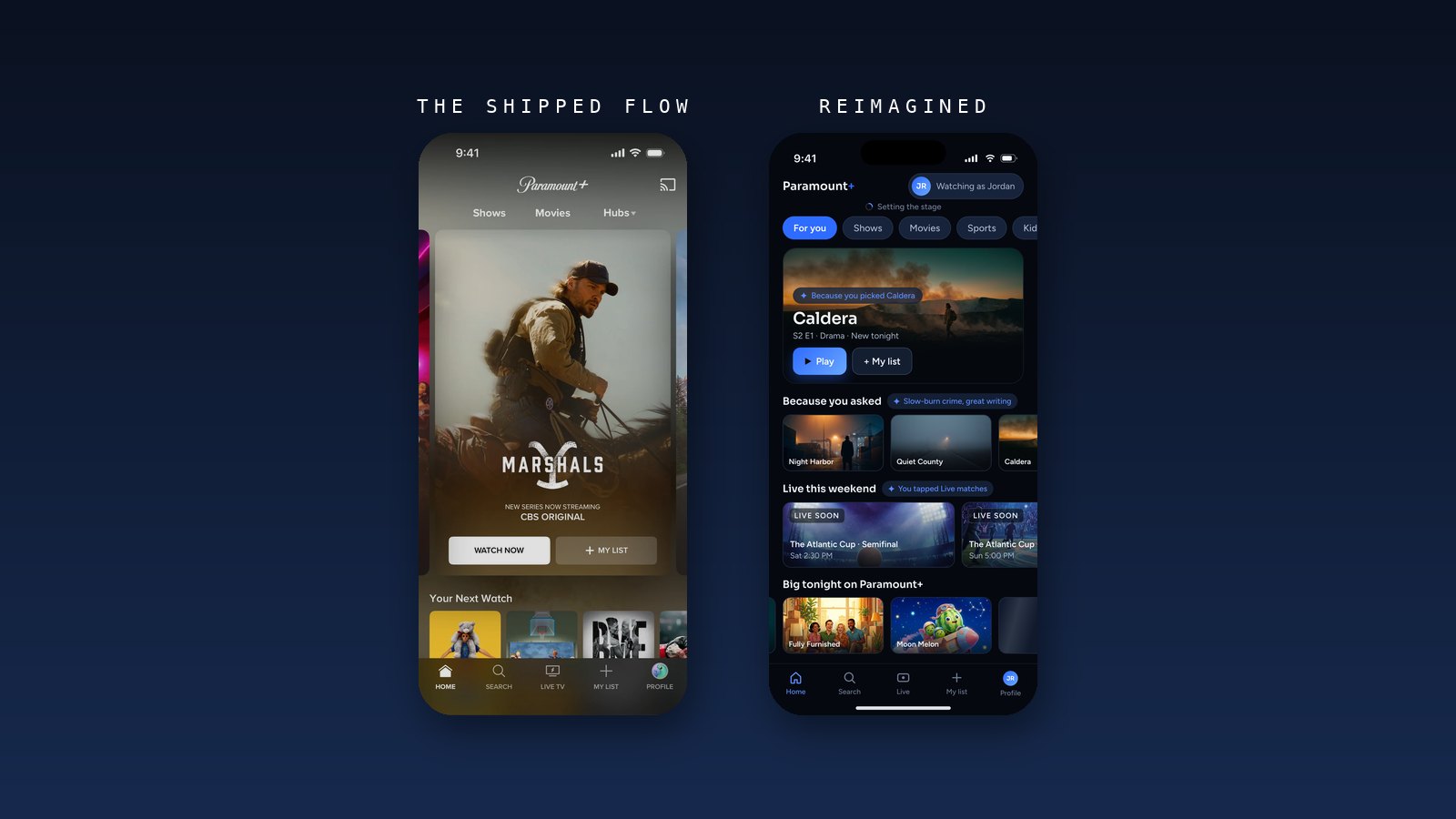
Every row on the first home names its reason: because you picked Caldera, because you asked for slow-burn crime. Personalization a subscriber can audit and correct, rather than a black box that quietly guesses.
“The shipped flow counts your taste from zero. The concept asks one question, and answers in your own words.”
The premise of the teardown
The AI Moment
This is the step the whole rebuild turns on. Instead of a poster grid and a counter, the subscriber writes one sentence. The system reads it back in plain language, tunes the picks in view, and carries the reasoning into the first home screen so the payoff is visible immediately. One adaptive step does what four screens of form fields could not.
1
Adaptive step, in place of a poster grid
0
Birthdays, genders, or ZIP codes asked
Shipped vs Reimagined
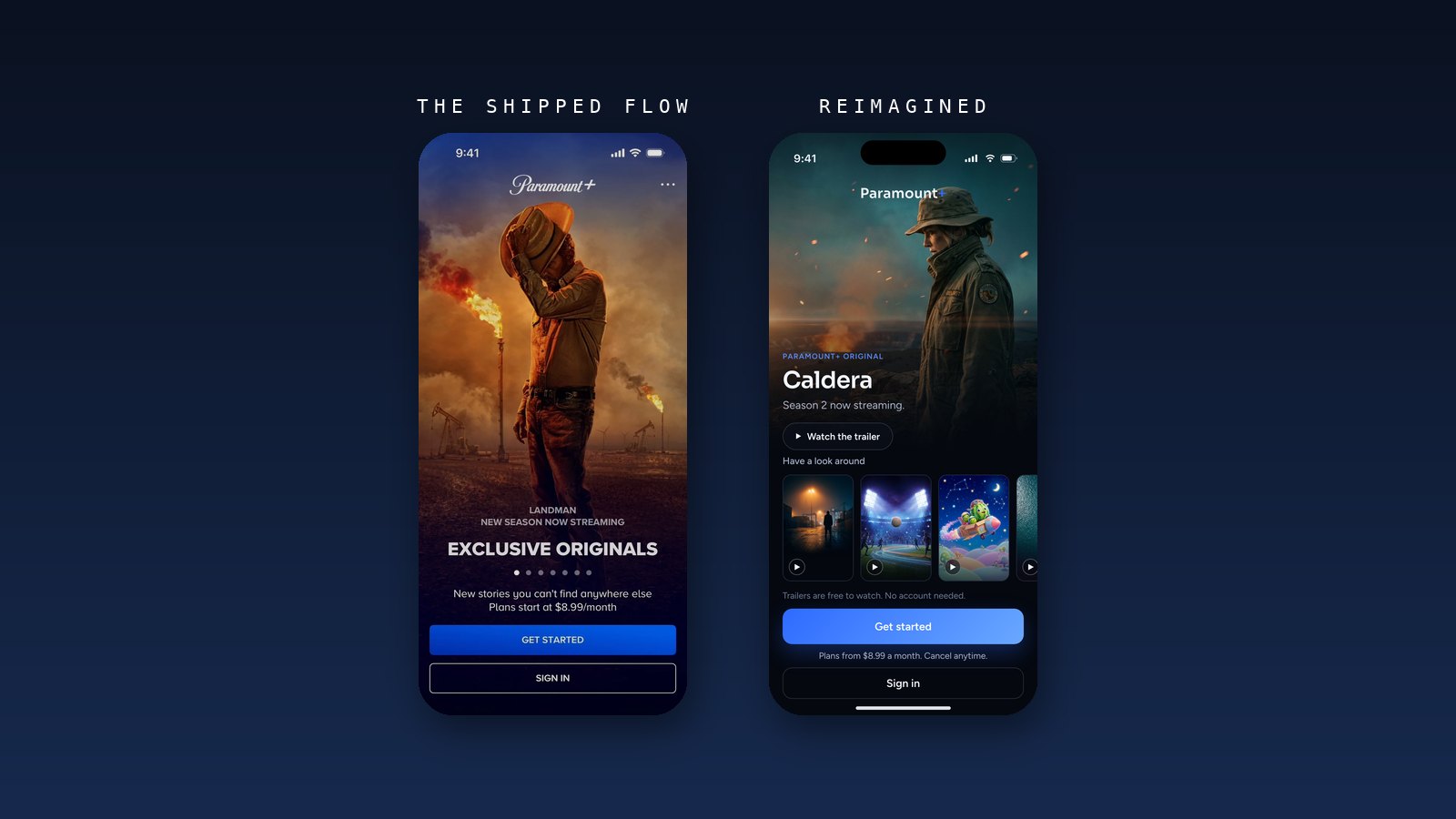
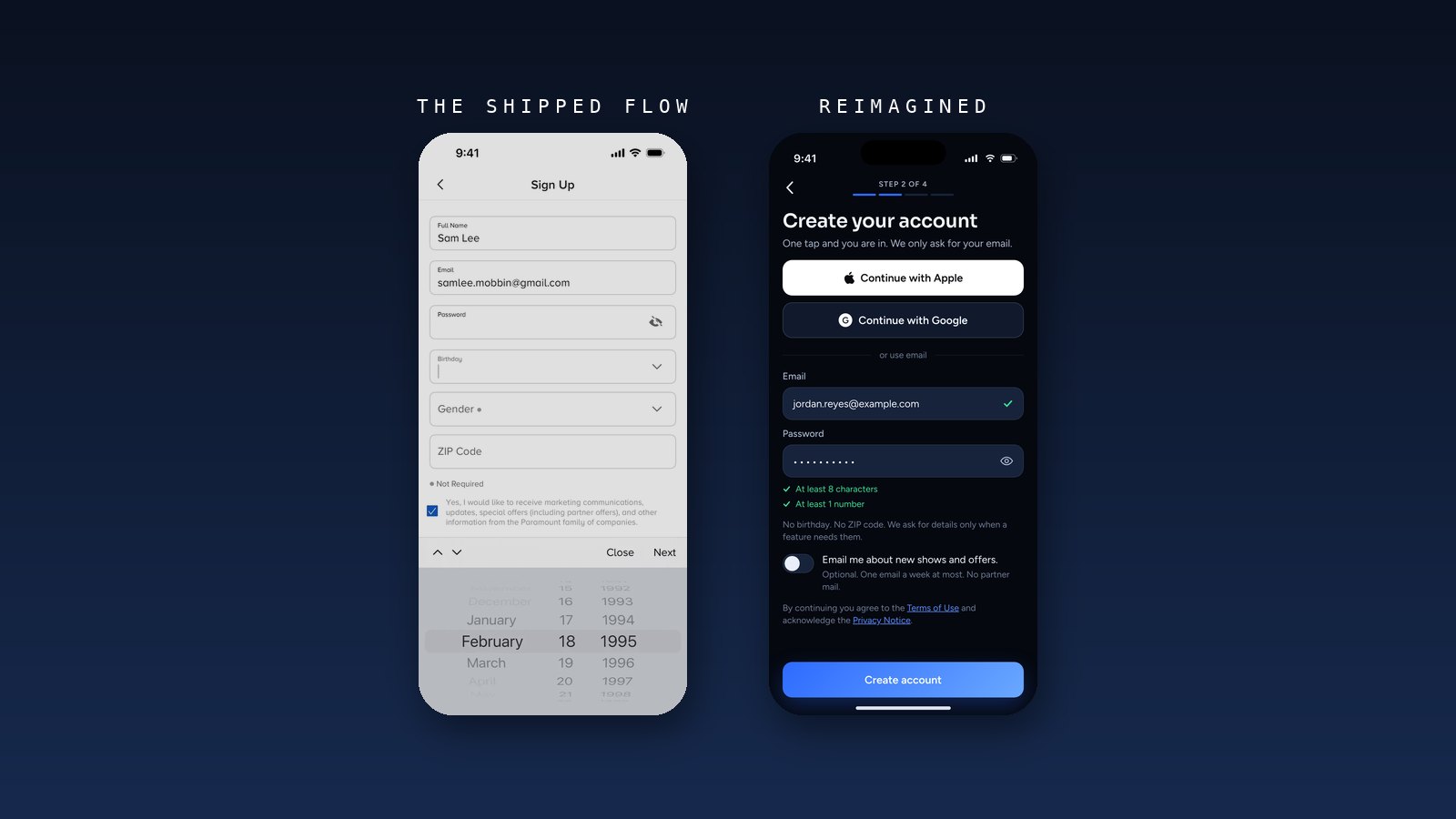
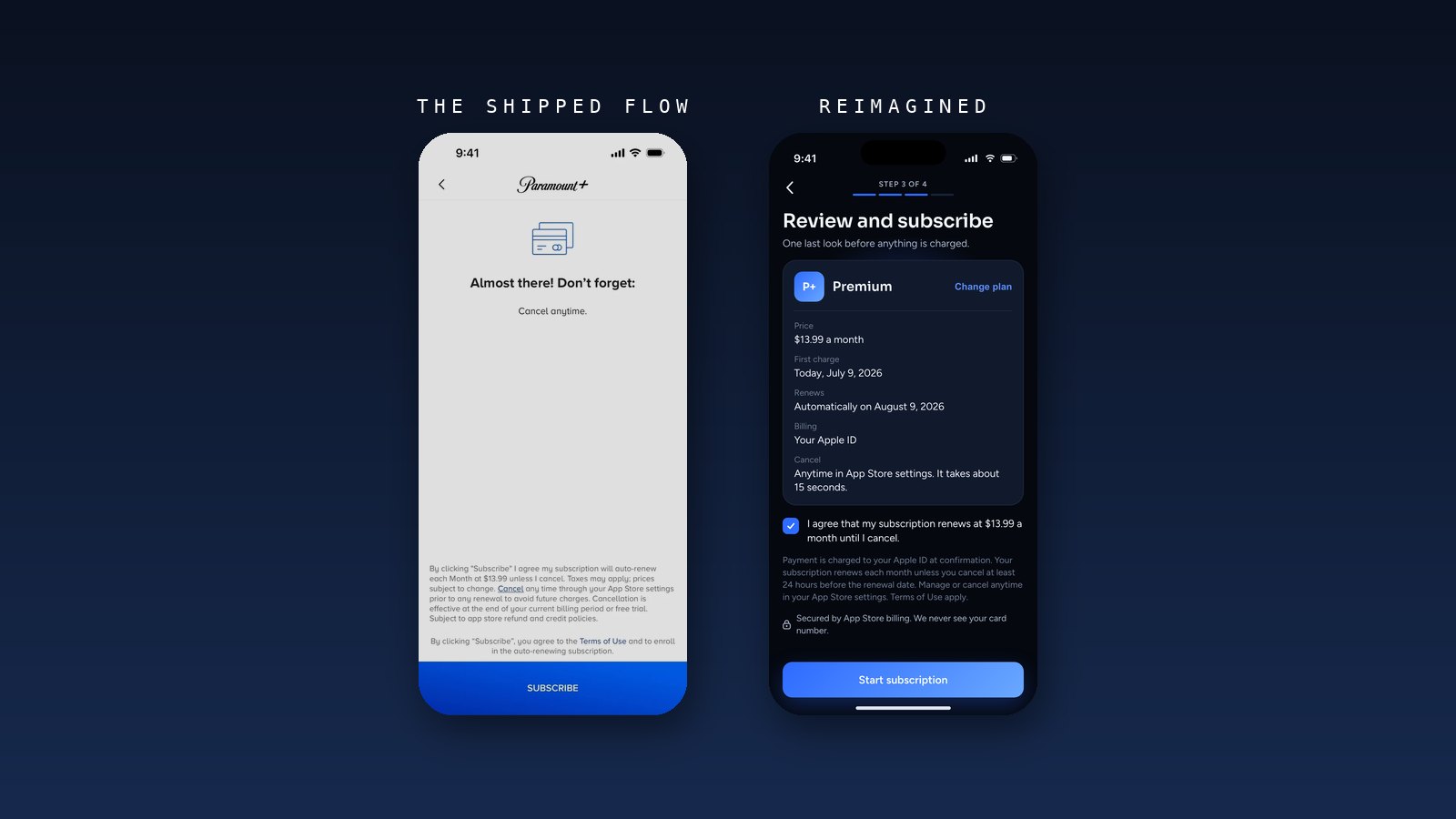
In every pair, the left phone is the shipped product and the right is the concept.
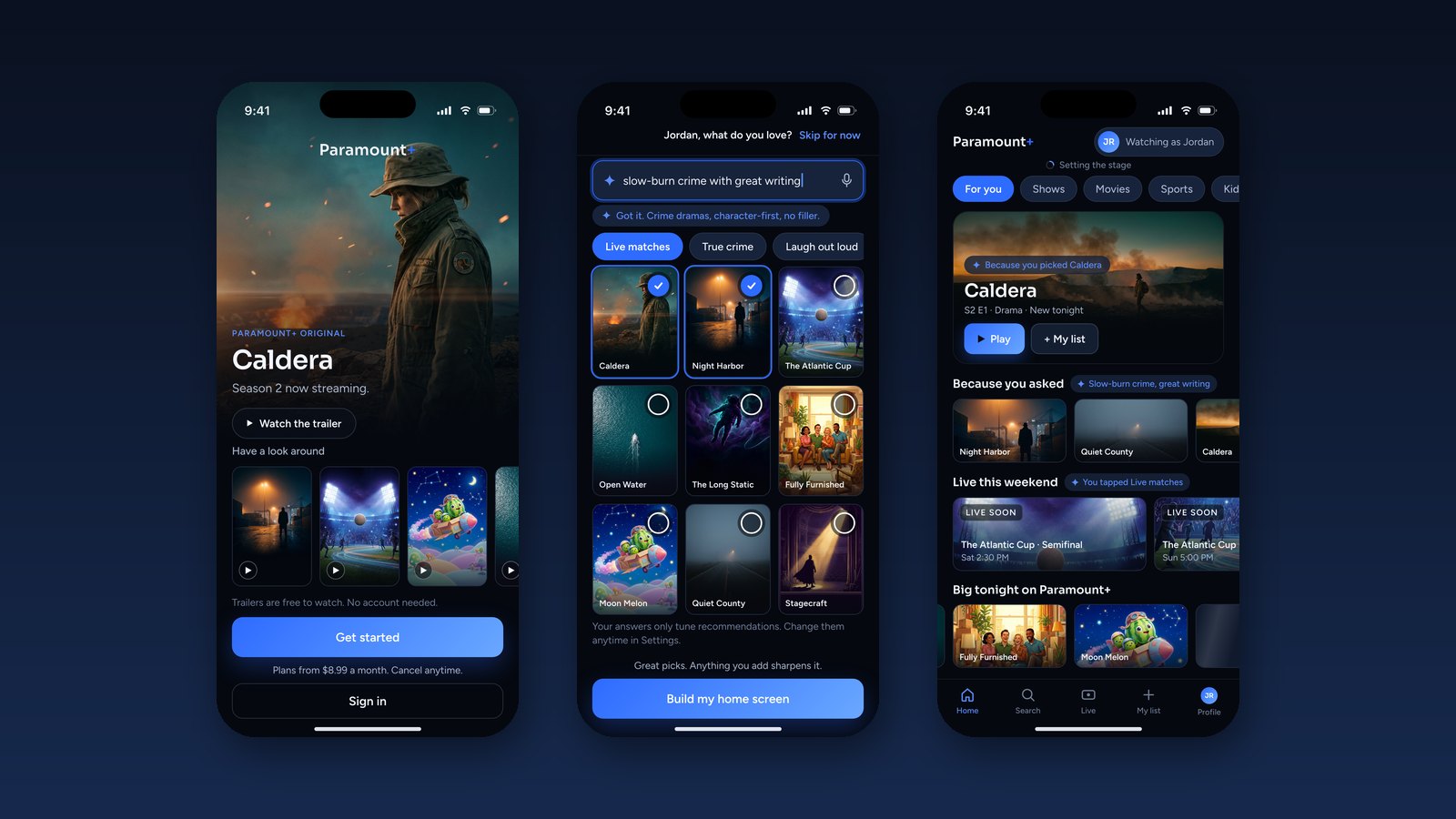
The Rebuild · Welcome, taste capture, first home
Seven screens end to end, with value in front of the paywall and forms pushed to the back.
The Welcome · Arrival
Trailers play before any account exists, so the catalog sells itself before the ask.
The Plan · Plans
A one-sided Most Popular campaign becomes an honest comparison with a reasoned recommendation.
The Account · Account
Six fields and a birthday wheel across four screens become one tap. No birthday. No ZIP code.
The Checkout · Payment
Price, first charge, renewal date, and the cancel path stated plainly where money changes hands.
The Taste Step · Personalization
NEXT (0) becomes a conversation: describe what you love and watch the picks sharpen.
The First Home · Payoff
Rows arrive with named reasons: because you picked Caldera, because you asked for slow-burn crime.
The Outcomes
13
Screens in the Shipped Flow
Welcome, plan sell, four screens of account entry, purchase, personalization, profiles, and first home, all before a first play.
7
Screens in the Rebuild
The same journey with value in front of the paywall, one-tap accounts, and an honest checkout. Six moments changed, nothing important dropped.
1
Adaptive AI Step
A single question in plain language replaces the poster grid, and its reasoning carries straight through to the first home screen.
Value first, forms last, and a home screen that proves it listened.
We will walk through this teardown live, then run the same read, ask, and prove pass on the flow your customers actually move through.